
What happened in Sakartvelo (Georgia)?
Disclaimer: Out of respect for the Georgian (Kartvelian) people, we will use the name of their state as requested by the Kartvelians themselves - Sakartvelo.
People who don't live in their own selfish and unempathetic bubble have been watching the scene of protests in Sakartvelo and the police brutally dispersing them for days now, and these protests were particularly widespread in 2023, following the adoption of a law modelled on Russia's ‘foreign agents’ law, and in 2024, following the Georgian Dream party's rigging of the parliamentary elections. So what is going on there? Let's try to figure it out.
The first and most important thing to understand. Sakartvelo is a parliamentary republic. It became such in 2018. That is, everything here is decided exclusively by the parliamentary majority. That is why parliamentary elections play a much more important role here than, for example, in Russia or Ukraine (although in Ukraine, the parliament is also the highest legislative body, the mentality of Ukrainians does not allow them to understand that parliamentary elections are much more important than presidential ones).
Background.
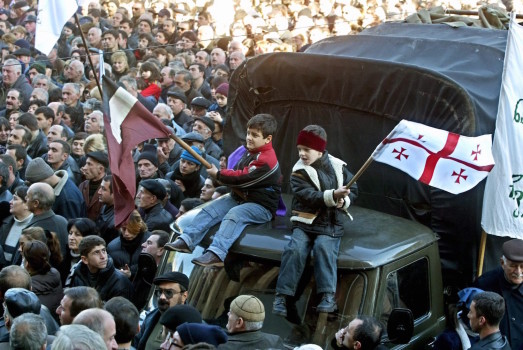
Saakashvili solved the problem of Adjarian separatism - during the Adjara crisis, he dealt with the Russophile separatist government of Aslan Abashidze, who fled to Russia after the crisis, without firing a shot. The Autonomous Republic of Adjara fully secured its autonomy within Sakartvelo, and it did not regret it. In just a few years, Batumi, the capital of Adjara, became one of the most attractive tourist cities.
In 2007, protests began against Saakashvili's government. He was accused of human rights violations and the murder of Sandro Girgvliani. The United National Council, which led the protests, included pro-Russian parties, and pro-Russian Kartvelians TV channels supported the protests. The protests were suppressed by force, and Saakashvili called for re-elections.

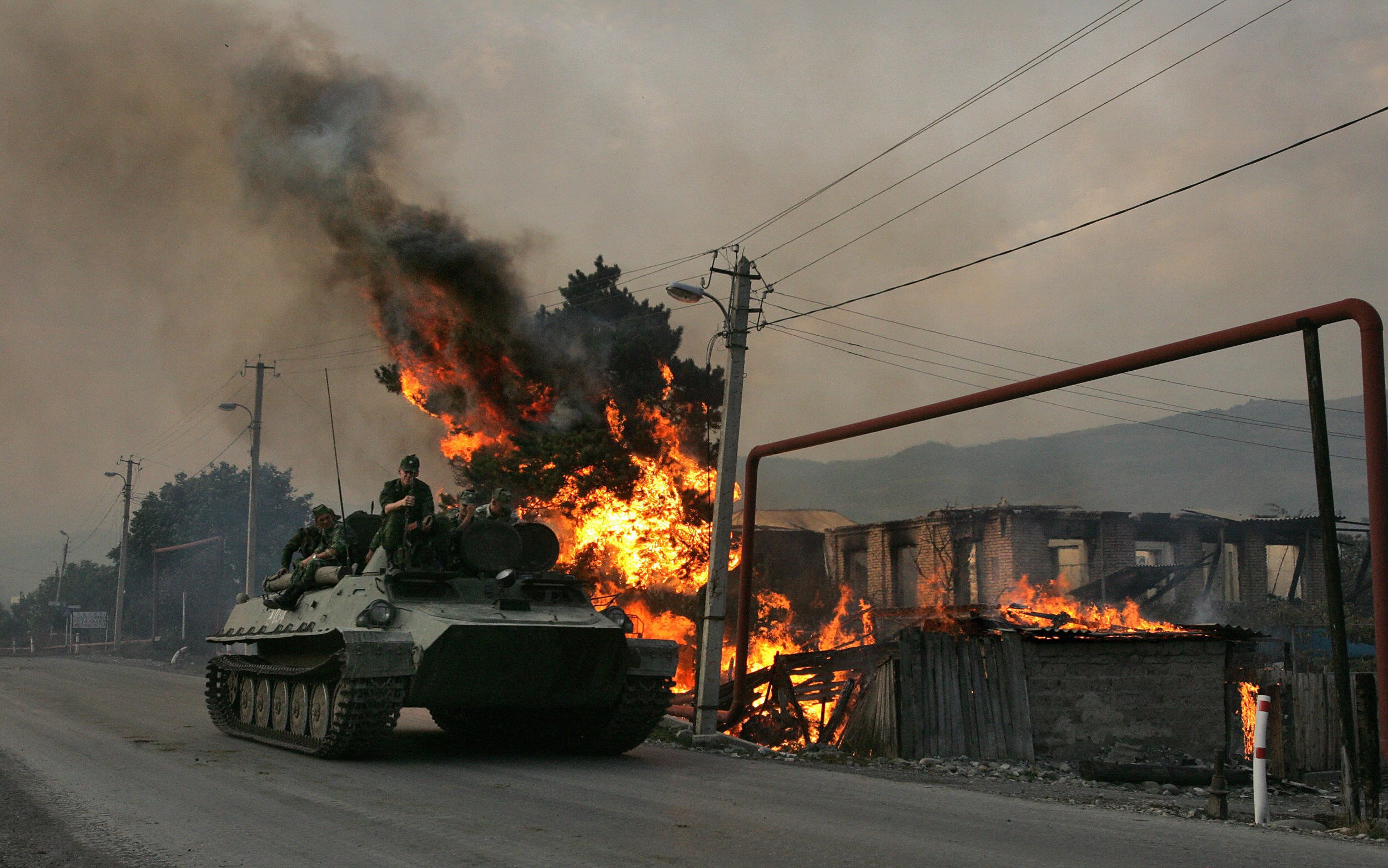
And in the 2008 re-election, Saakashvili wins again. In 2008, the Russian-Georgian war breaks out. Saakashvili attacks some positions in the separatist and Russian-puppet Republic of South Ossetia. Russia, which had been preparing for a full-scale war with Sakartvelo (as Saakashvili had stated in an interview (video, text) to Ukrainian journalist Dmytro Hordon in 2010), together with the Russian-puppet Republic of Abkhazia, declares war (which it called the ‘Operation to Enforce Peace’) on Sakartvelo.
The war lasted from 1 to 16 August and ended with the signing of a peace treaty - the South Ossetia War ceasefire agreement (called the Medvedev-Sarkozy Plan in Russian historiography). Sakartvelo completely lost the territories of Abkhazia and South Ossetia.
And what about after Saakashvili?
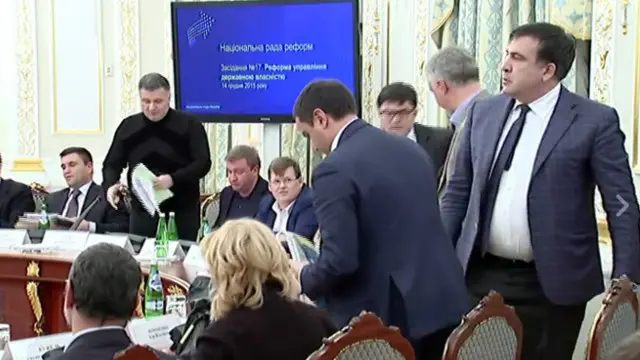 |
| One of the most popular exchanges between Saakashvili (then Advisor to the President of Ukraine) and Avakov (then Minister of Internal Affairs of Ukraine) in 2015. |
With its populist slogans, the party promised voters accession to the EU and rapprochement with the West, while its actions were pro-Russian. Thus, there were protests against this party in 2019 and 2021. You can read more about the deception of the Georgian Dream in the Russian opposition journalism project, currently based in the Netherlands, Prodolzheniye sleduyet follows: video and text.
In 2018, Salome Zurabishvili won the presidential election, running on the Georgian Dream coalition. Although her claims that Sakartvelo was responsible for the 2008 Russian-Georgian war caused controversy, Zurabishvili has never been pro-Russian. This caused a conflict with the Georgian Dream, which in 2022-2023 restricted Zurabishvili's activities (including banning her from visiting Ukraine) and tried to impeach her. However, with the beginning of the Full-scale invasion of Ukraine by Russia and Belarus, Zurabishvili took a clear pro-Ukrainian position, while the Georgian Dream government discredited Ukraine and even tried to accuse her of preparing a coup together with Saakashvili.
And what's going on there now?
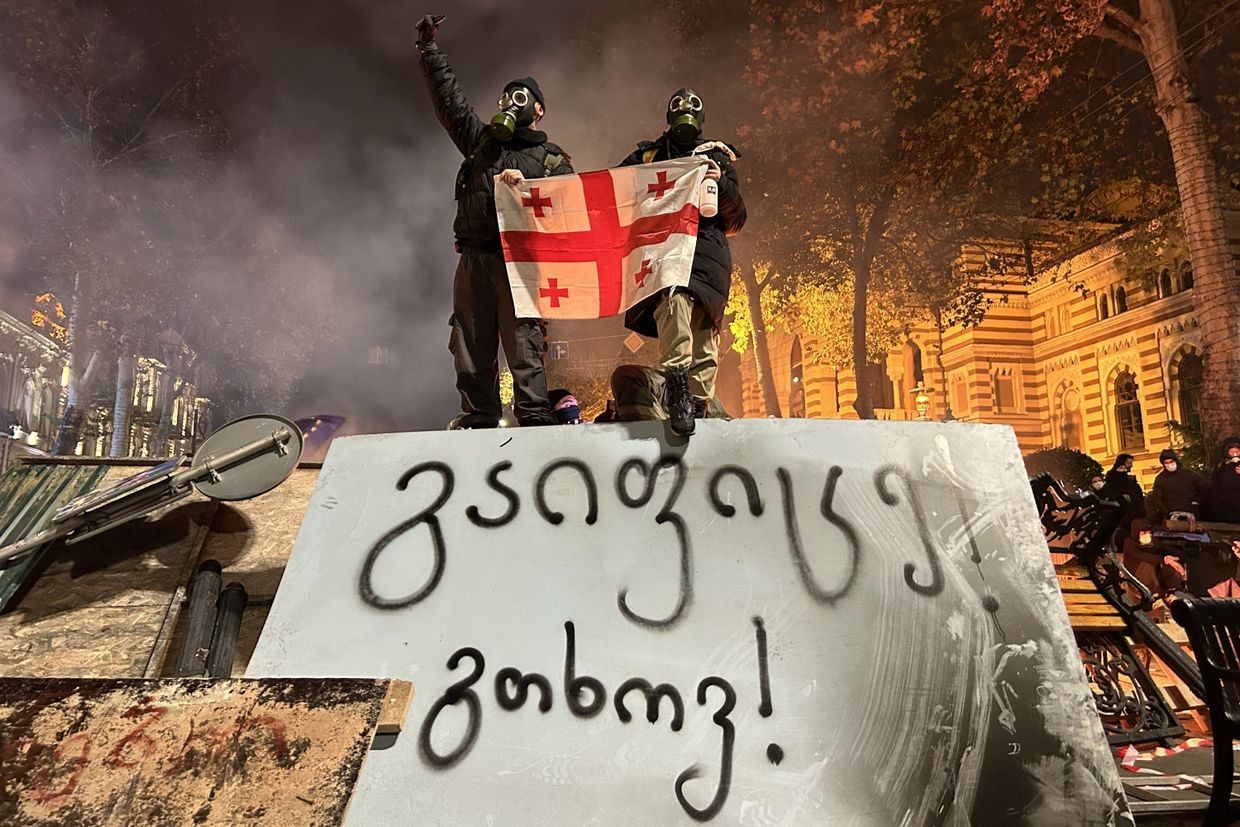
And so, on 26 October 2024, regular parliamentary elections were held in Sakartvelo. The opposition parties that did not support the Georgian Dream's course towards Russia united in the Coalition for Change coalition, while the United National Movement party stood separately from this coalition. However, as a result of fraud, the Georgian Dream once again gained an absolute majority. This triggered another round of protests that began on 28 October and continue to this day. On 28 November, the Georgian Dream government announced that it was suspending negotiations on EU membership until 2028. The Georgian Dream Government is still trying to discredit Ukraine, for example, on 30 November, Prime Minister Irakli Kobakhidze stated that ‘Everyone was once again convinced that ‘National Maidan’ will not take place in Georgia. For the third year already, specific European politicians and bureaucrats, who failed to achieve the Ukrainianisation of Georgia, are constantly trying to use the status of the candidate and the issue of opening negotiations to weaken the country, so-called provoke polarisation and artificially depopulate society.’.
On 14 December, presidential elections are due to take place, and the Georgian Dream has already nominated Russian footballer of Georgian origin Mikheil Kavelashvili as a candidate. Since the parties opposed to Georgian Dream called for a boycott of any further elections, they did not nominate candidates for the presidential election, and thus Kavelashvili automatically became president without an election.
President Zurabishvili said at the protests on 28 November:

In 2025, BBC World Service published an investigation claiming that during the crackdown on protests in November–December 2024, the police added a chemical substance to the water in water cannons — α-bromobenzyl cyanide, known as camite — a chemical that was actually used during the First World War. According to the investigation, this substance could have caused severe burns and long-term respiratory symptoms among protesters. However, the Russophile State Security Service of Georgia (SSG) officially rejected the claim that ‘World War I chemicals’ were used and stated that only standard CS gas (a tear gas agent) commonly used by law enforcement agencies around the world was used. The SSG noted that no prohibited agents were included in domestic purchases.
On 4 October 2025, protesters in Tbilisi almost managed to seize the Presidential Palace. According to the Kartvelian media outlet Newsgeorgia, there were thousands of protesters in Tbilisi at that time. Some of the demonstrators tried to break through to the Presidential Palace (Orbeliani Palace) and partially damaged the fence, but were unable to seize the building because the police used water cannons, tear gas and pepper spray to disperse them, as well as detaining participants. According to police, dozens of people were detained in the following days (at least 13 as of 6 October), and the police also reported injuries to both protesters and police officers. The authorities called it an attempt to overthrow or subvert the constitutional order; some of the organisers were later charged with fabricated allegations of conspiracy/attempted ‘coup d'état’.

Protests in Sakartvelo, albeit not on the same scale as in 2023-2024, continue, and Sakartvelo is engulfed in a serious political crisis. On one side are the pro-European parties Coalition for Change, Unity – National Movement, Strong Georgia, For Georgia, For the People, Freedom Square, and Federalists, joined by former President Salome Zurabishvili, and on the other, the Russophile parties Georgian Dream and People's Power, led by Russophile Prime Minister Irakli Kobakhidze, Russophile President Mikheil Kavelashvili and Russian-Georgian oligarch Bidzina Ivanishvili, supported directly by Russia and Russophile parties, such as the Fidesz–KDNP Party Alliance from Hungary.
Only time will tell who the Kartvelians will serve. We can only wish them good luck.


Comments
Post a Comment