
Czech politics after the 2025 elections: Who is in the parliament and what will happen next?
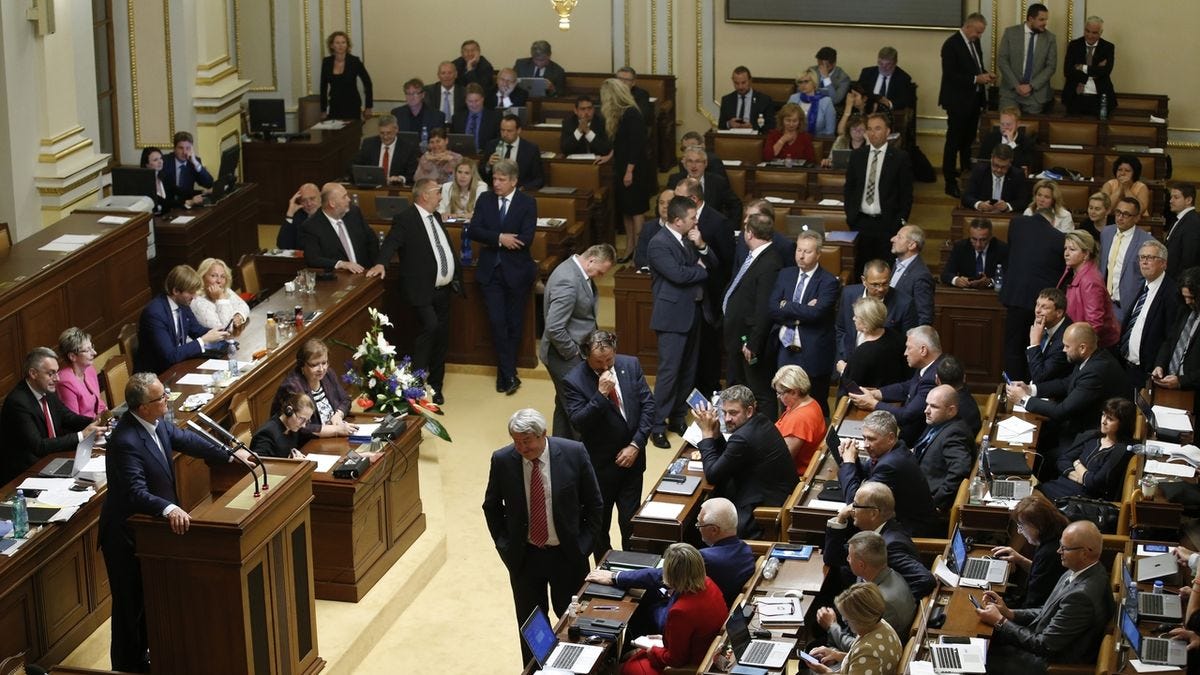
The new government of the Czech Republic, led by right-wing populist Prime Minister Andrej Babiš, was due to face a mandatory vote of confidence in parliament in January 2026. The vote took place amid statements about a possible review of the country’s foreign policy, in particular regarding the cessation of support for Ukraine and the curtailment of cooperation with the European Union.
Discussions in the 200-seat lower house of parliament, the Chamber of Deputies of the Czech Republic, began on Tuesday, 13 January. To continue its work, the new administration had to obtain the support of a majority of deputies. Babiš’s coalition currently has 108 parliamentarians, which formally gives it the necessary majority.
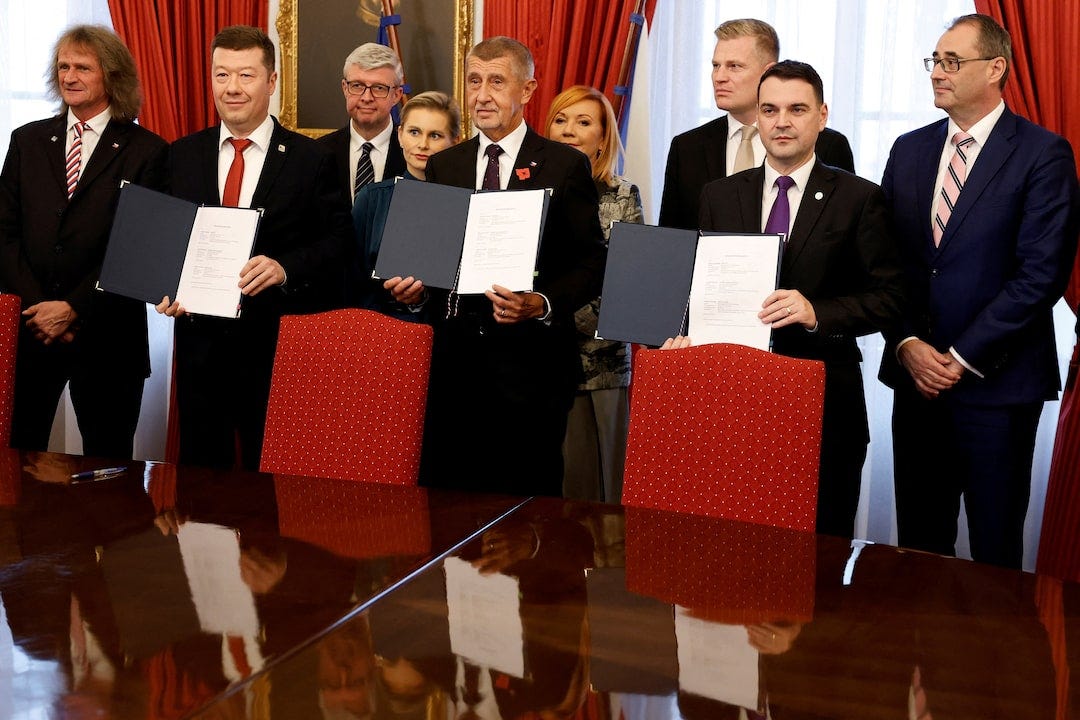
Babiš’s coalition: Overview of parties
ANO (ANO 2011)
ANO as a party currently adheres to a right-wing populist ideology. The party was founded in 2011 by media mogul and oligarch Andrej Babiš. Babiš has a relatively long political career - he first entered the parliament in 2013, from 2014 to 2017 he was the Minister of Finance of the Czech Republic and First Deputy Prime Minister of the Czech Republic, and from 2017 to 2021 he won the position of Prime Minister of the Czech Republic, the end of his premiership was remembered for large-scale rallies against his leadership, and initially promised efficient and honest governance, which was precisely against the background of dissatisfaction with the traditional political elite and corruption scandals in the Czech Republic. According to the original words of the movement itself, ANO aimed to achieve a fairer and more functional society based on the rule of law. The movement positioned itself not as a classic party of the old political system, but as an action of dissatisfied citizens — that is, a form of civic activism directed against “politicians who only think about themselves.”
The information is taken from the article “General Elections 2013 Czech Republic” on the “Foundation Robert Shuman” resource and from the article “Czech billionaire’s AN0 2011 group backing 10 Senate hopefuls” on the “Lidovky” resource
In the European Parliament, ANO was initially part of the liberal group ALDE, but since 2024 it has moved to the European right-wing populist pro-Russian group Patriots.eu.
“Freedom and Direct Democracy” (SPD)
This political party was founded by Tomio Okamura, a Russophile politician of Japanese origin (who after Babiš’s victory won the position of President of the Chamber of Deputies) and Radim Fiala, a former member of the Civic Democratic Party and Dawn of Direct Democracy, and now a Member of the Chamber of Deputies from Freedom and Direct Democracy.
The party’s official ideology on the website tells us that the SPD advocates a strong and independent state mechanism to protect citizens; homophobia; specific economic and social decisions on housing, prices, health care and pensions; the protection of “Czech interests” as the first priority, and also emphasizes the “protection of Czech identity” and the policy oriented towards Czech citizens before foreigners”, and also supports certain economic measures to “improve the welfare of citizens”.
The party adheres to far-right conservative views, including Euroscepticism, direct democracy, including referendums and mechanisms for people to influence political decisions, and strong anti-immigration, and criticism of multiculturalism. It is not uncommon for the party to be described as openly neo-fascist.
The party was in opposition to the government of Petro Fiala (at least until 2025). In 2025, it took part in the elections as part of a broad right-wing bloc (including together with the parties PRO, Trikolora and Svobodní).
In 2025, after the parliamentary elections, the SPD party entered into a coalition with the ANO party of Andrej Babiš.
The information is taken from the article “Freedom and Direct Democracy (SPD)” from the resource “Radio Prague International” and from the article “Runners and Riders: The Parties Fighting To Get Into The Czech Parliament This October” from the resource “Brno Daily”
Motorists for Themselves (AUTO)
This party was founded with a focus on car ownership issues, opposition to the phase-out of internal combustion engines in the European Union, and anti-environmentalism.
Anti-environmentalism is a set of ideas and actions that criticism of environmentalism originates from multiple ideologies, interest groups, and political objectives. Oppositions can take the form of an organized countermovement, aimed at scientific claims about climate change, environmental policies and regulations, in both national or international spheres. Anti-environmentalist actors may include workers in industries and companies that are threatened by environmental policies, and anti-environmentalist think tanks. The reasons for opposition vary. They range from economic interests to ideological and political positions that are hostile towards environmental social and political change, including critical perspectives that encourage environmentalists to think about more inclusive approaches toward sustainability.
The party became noticeable precisely because of its concentration on transport issues and opposition to certain environmental initiatives, that is, it criticized the ban on internal combustion engines and parking restrictions, denied the “ideological promotion of bicycles” and the introduction of low-emission zones, which allegedly “violate the rights of car owners”, refused to support the accelerated introduction of electric cars without taking into account economic feasibility.
The party ran in a coalition with another political movement (Přísaha) in the 2024 European Parliament elections and won representation there (one MP). In the Czech parliamentary elections in October-November 2025, the AUTO party for the first time overcame the passage barrier and won seats in the lower house of the Czech parliament - the Chamber of Deputies.
The information is taken from the article “Elections 2025: What Are the Parties Promising in the Area of Cycling Transport?” from the resource “Městem na kole”.
In total, the government consists of 16 ministers. And currently, all positions are occupied by politicians from Babiš’s coalition.
The parties participating in the coalition, similar to similar Russophile EU parties - for example Fidesz–KDNP Party Alliance or Direction – Social Democracy, do not hide their sympathy for US President Donald Trump and declare their intention to significantly change both the country's domestic and foreign policy.
A look at the parties’ foreign policy
‘I would like to state clearly that the Czech Republic and Czech citizens will be the top priority for our government,’ Babiš said during a speech in parliament, probably hinting that from now on he will not care about foreign policy, which does not correspond to his pro-Russian course or the ideology of his cabinet
Unlike the previous pro-European government, the new cabinet opposes financial aid to Ukraine and does not support EU loan guarantees for the country, which is resisting Russian aggression. Babiš is thus effectively aligning himself with the position of the pro-Russian prime ministers of Hungary and Slovakia, Viktor Orbán and Robert Fico.
At the same time, the government does not plan to curtail the Czech initiative to purchase artillery shells for Ukraine. This is a programme under which approximately 1.8 million rounds of ammunition were purchased on markets outside the EU last year. Under the terms of the initiative, the Czech Republic only administers the process and does not finance the purchases with its own funds.
Tomio Okamura, leader of SDP who became Speaker of the Czech Chamber of Deputies, has already been involved in numerous scandals, including ordering the removal of the Ukrainian flag from the Czech parliament building in November 2025. Its representatives also insist on the expulsion of most of the approximately 380,000 Ukrainian refugees currently in the country.
In general, everything is quite clear with the foreign policy of the parties - they adhere to a clear Russophile, anti-EU, anti-NATO, right-wing populist, homophobic policy, but they cannot clearly express this due to the resistance of a large number of opposition parties, the dissatisfaction of the people (literally, if you take the first 6 parties by the number of votes cast - about 56% of the votes were currently given to opposition parties) and because of a very pro-Ukrainian the President of the Czech Republic - Petr Pavel (to whom Babiš himself lost in the presidential elections in 2023) who from time to time does not give peace to Russophile politicians.
A vote of confidence in January 2026
According to Reuters and AP News, the mandatory vote of confidence took place on 15 January 2026 and was won by Babiš’s coalition. Babiš’s government won the vote of confidence, receiving 108 votes in favour and 91 against in the lower house of parliament.
According to the Prague Daily News, all parties in Babiš’s coalition voted in favour of the confidence vote, i.e. 108 MPs from the ANO, SPD (Freedom and Direct Democracy) and AUTO (Motorists for Themselves) parties, respectively. On the other hand, all other opposition parties voted against the vote of confidence: ODS (Civic Democratic Party), STAN (Mayors and Independents), Pirates (Czech Pirate Party), KDU-ČSL (Christian and Democratic Union – Czechoslovak People’s Party) and TOP 09, which had 91 votes. Only one MP from the Mayors and Independents party did not vote for medical reasons.
By the way, what is atypical for the parliaments of the countries is the situation when a clearly defined number of parties in the parliament are governmental, and the other number are clearly oppositional, and this can be seen from the number of votes. Right then we saw such a picture where Babiš’s coalition fully voted for the vote of confidence, and all other parties - against.
Since a simple majority is required to pass a vote of confidence, Babiš’s coalition of 108 MPs won and secured his Russophile premiership.
The results of the vote of confidence are expected to determine the future direction of the Czech Republic’s domestic and foreign policy, in particular its role in supporting Ukraine against the backdrop of the ongoing war.
Currently, the wave of right-wing populist Russophile parties has captured not so many countries. In fact, if you look at those that have real influence, these are the Czech parties named today, Alternative for Germany in Germany, Fidesz–KDNP Party Alliance and National Self-Government of Germans in Hungary in Hungary, Direction – Social Democracy, Voice – Social Democracy, Slovak National Party in Slovakia, Alliance for the Union of Romanians and S.O.S. Romania in Romania, Freedom Party of Austria in Austria, National Rally in France, Greek Solution, Golden Dawn, DIKEA, Voice of Reason, Niki in Greece, Patriotic Electoral Bloc of Socialists, Communists, the Heart and Future of Moldova in Moldova, Alliance of Independent Social Democrats, Serb Democratic Party, Party of Democratic Progress in Bosnia and Herzegovina, Aleksandar Vučić – Serbia Must Not Stop in Serbia, and possibly some others.


Comments
Post a Comment